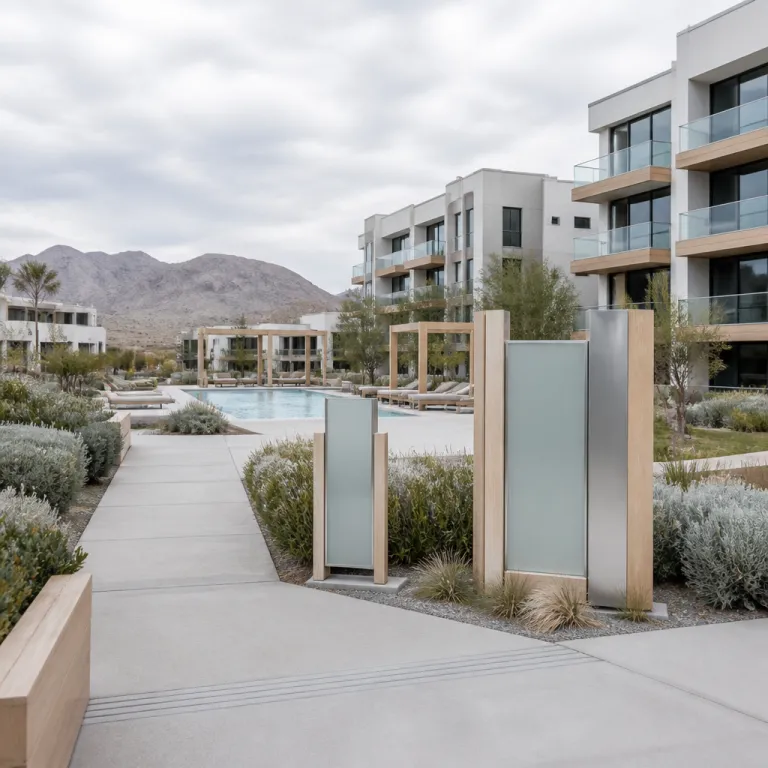
Why refined hotel signs in Maricopa County matter for luxury guests
When you book a premium apartment hotel in Maricopa County, you expect effortless orientation from the very first sign. Elegant yet clear signage shapes your first impression before you even step into the lobby, and it quietly signals whether a property truly understands luxury hospitality. For travelers comparing several hotels in Maricopa or nearby Scottsdale, the quality of signs for hotels in Maricopa County often reveals how seriously each property takes guest comfort, safety, and accessibility.
Outside, the main freestanding sign must respect local zoning rules while still feeling distinctive and upscale. Under the Maricopa County Zoning Ordinance §1404.3 (commercial sign standards, consulted March 2024), freestanding hotel identification signs in many unincorporated commercial districts are typically capped at modest heights and surface areas, which pushes design teams toward refined proportions rather than oversized clutter. Rather than relying on sheer scale, leading hospitality brands in the Phoenix Scottsdale area emphasize typography, lighting, and materials so that exterior hotel signs remain both compliant and highly legible. Luxury apartment hotels therefore work with specialist signage companies to create custom signs that balance brand visibility, neighborhood aesthetics, and strict safety requirements.
For guests, this means you should look for properties where exterior signage feels coherent from street to lobby. High end hotels in Maricopa County typically coordinate letter signs on façades, parking signs at entrances, and directional signs along driveways into one visual language. When every sign, from the first parking indication to the smallest room signs, uses consistent typography, finishes, and illumination, the entire city stay feels more polished, intuitive, and calm.
Thoughtful signage also plays a crucial role in guest safety and accessibility. Clear informational signs about emergency exits, pool rules, and fire procedures must be visible without overwhelming the tranquil atmosphere of a luxury lobby or wellness center. In Maricopa and the Phoenix Scottsdale corridor, leading apartment hotels now integrate ADA braille standards into tactile braille signs and room signs, ensuring that guests with visual impairments can navigate independently and confidently.
As you compare premium properties online, pay attention to how they present their signage strategy. Many hotels now showcase lobby signage, pool signs, and even custom directional signs in their photo galleries because these details reassure discerning travelers. When a property invests in high quality braille signage, specific signs for safety, and well maintained signs for parking, it signals a deeper commitment to guest wellbeing that goes far beyond décor and marketing language.
From parking signs to pool signs : seamless wayfinding for apartment hotels
Wayfinding is the quiet backbone of a relaxed stay in any apartment style hotel. After a long flight into Phoenix Scottsdale, you do not want to circle a dim garage searching for your reserved space or wander corridors trying to locate your room. In well designed hotels in Maricopa County, every sign from the entrance to the farthest room is part of a carefully mapped signage system that anticipates guest decisions.
Start with the arrival sequence, where signs for parking must be both visible and discreet. Premium properties in the city often use custom signs at the driveway entrance, then repeat smaller parking signs at key decision points so drivers never feel lost. These parking sign solutions usually combine letter signs, directional arrows, and clear icons, guiding you smoothly from the street to the correct level and finally to the lobby center without abrupt dead ends or confusing turns.
Inside the building, directional signs become the guest’s silent concierge. In a large apartment hotel with multiple wings, good directional sign planning ensures you can move from lobby to room, spa, and pool without hesitation. Look for informational signs near elevators that show floor plans, room ranges, and amenities, supported by smaller room signs and corridor signage that confirm you are still on the right path and that emergency exits are never more than a short walk away.
Pool areas in Maricopa County require particular attention because they combine leisure with strict safety obligations. Luxury properties now integrate pool sign elements into the overall design, using custom typography and materials while still delivering mandatory safety messages. You will often see pool signs that blend depth markers, safety warnings, and human trafficking awareness notices into one coherent set of informational signs, avoiding visual chaos while meeting regulatory expectations and internal brand standards.
For extended stays, especially for guests who work remotely, intuitive signage becomes even more valuable. If you are planning a long stay with reliable high speed internet, you can review how leading apartment hotels structure their spaces and wayfinding by exploring this guide to long stay lodging for discerning travelers. Properties that invest in clear signs, from lobby directories to subtle room signs, usually offer the same level of thoughtfulness in their digital infrastructure, workspace design, and guest services.
Safety, ADA braille, and human trafficking awareness in luxury signage
High end apartment hotels in Maricopa County now treat safety signage as part of their guest experience, not just a regulatory checkbox. Behind the scenes, design teams work closely with the Maricopa County Planning and Development Department and specialist signage companies to align every sign with local codes. For travelers, this collaboration translates into a calm environment where safety information is always present yet never intrusive or visually jarring.
Accessibility is a central pillar of this approach, especially for guests who rely on tactile guidance. Modern properties specify ADA braille standards for all critical braille signs, from room numbers to emergency exits and lobby facilities. Under the 2010 ADA Standards for Accessible Design §§216–703 (U.S. Department of Justice, updated 2010, accessed March 2024), raised characters and braille must meet precise height, contrast, and placement rules. When you run your fingers across these room signs, you should feel crisp, durable dots and clear letter signs, confirming that the hotel respects both legal requirements and human dignity.
Fire safety signage is another area where luxury and responsibility intersect. Discreet yet legible fire safety diagrams near stairwells, along with directional signs pointing to exits, help guests orient themselves quickly in an emergency. In Maricopa and Scottsdale, many hotels now commission custom signs that integrate evacuation routes, assembly points, and multilingual instructions into elegant informational signs that match the interior design while still complying with building and fire codes.
One of the most significant shifts in recent years is the integration of human trafficking awareness into hotel signage. Many apartment hotels in Maricopa County now display trafficking signs in staff areas and subtle human trafficking information in guest spaces, outlining how to recognize and report suspicious behavior. These specific signs are often placed near the lobby center, elevators, and pool entrances, where both staff and guests naturally pause and can absorb the message without feeling overwhelmed.
For travelers who prioritize ethical stays, it is worth checking how a property addresses human trafficking risks. Some hotels in Maricopa highlight their partnerships with anti trafficking organizations and show examples of their trafficking signs and informational signs in training materials. To understand how this level of social responsibility aligns with broader shifts in upscale lodging, you can read about the wider trend in the aparthotel boom among luxury travelers, where safety, privacy, and ethics increasingly shape booking decisions.
Design innovations : from digital signage to eco conscious materials
Luxury apartment hotels across Maricopa County are rethinking signage as a design feature that supports both aesthetics and sustainability. Many properties now use digital signage in lobbies and conference areas, allowing teams to update informational signs in real time without printing new panels. For guests, this means you see accurate event schedules, pool opening hours, and city recommendations displayed on crisp screens that match the interior mood and lighting.
Regulators encourage this evolution while still enforcing core rules about size, placement, and safety. The county’s zoning framework, accessed through tools such as the Maricopa County Zoning Ordinance and digital permit applications, ensures that even the most innovative custom signs respect community standards. Signage companies working in Phoenix Scottsdale often combine eco friendly materials, low energy lighting, and durable finishes so that exterior signs, parking signs, and directional signs age gracefully under the desert sun and require fewer replacements.
Inside the building, design teams experiment with layered wayfinding systems. You might notice subtle letter signs etched into stone near the lobby center, complemented by braille signs at hand height and digital directional signs at key junctions. This multi sensory approach helps every human guest, regardless of ability, move confidently from room to pool, spa, and restaurant without constantly asking staff for directions or consulting a map.
Pool areas and wellness zones are also benefiting from more refined signage strategies. Instead of cluttered boards, you will see a small family of pool signs that combine safety rules, depth information, and accessibility guidance in a calm visual language. In some hotels in Maricopa, designers integrate pool sign elements into surrounding landscaping, using weather resistant materials that echo local stone and vegetation while still keeping safety messages clear and legible from multiple angles.
For travelers comparing properties online, these innovations can be a useful proxy for overall quality. A hotel that invests in coherent signage, from custom exterior signs to carefully placed informational signs, usually shows the same care in room layouts, technology, and guest services. If you value thoughtful design and independence during your stay, you may also appreciate this perspective on why many solo travelers now choose apartment style stays, where intuitive wayfinding and privacy play a decisive role.
How to read hotel signage photos when booking online
When you browse luxury apartment hotels in Maricopa or Scottsdale, the photos of signs can tell you more than the marketing copy. Look closely at the main exterior sign and the entrance area to judge how clearly the property communicates its presence to arriving guests. A well proportioned sign that respects Maricopa County height and area limits while still standing out from neighboring buildings suggests a mature design process and a serious approach to compliance.
Next, examine any images of the lobby and circulation spaces. High quality room signs with both text and braille, consistent letter signs on doors, and unobtrusive directional signs near elevators indicate that the hotel has invested in accessibility. If you can spot braille signs on corridor walls and clear informational signs about amenities, you can expect a smoother experience once you arrive with luggage in hand and need to find your room quickly.
Pool and wellness photos also reveal a great deal about safety culture. You should be able to identify pool signs that state depth, opening hours, and safety rules without dominating the relaxing atmosphere. In Maricopa County, responsible properties often include specific signs about children’s supervision, emergency contact numbers, and any seasonal restrictions, all integrated into a coherent pool sign design that still feels resort like.
Parking images deserve equal attention, especially if you plan to rent a car. Look for multiple parking sign elements, from entrance parking signs to level indicators and directional signs pointing toward the lobby center. A garage or outdoor lot with clear signage, good lighting, and visible safety instructions usually reflects a broader commitment to guest security throughout the property, including cameras, patrols, and well marked exits.
Finally, pay attention to any visible notices related to human trafficking awareness or emergency procedures. Hotels in Maricopa that display trafficking signs and human trafficking hotlines in discreet yet accessible locations demonstrate a serious approach to guest protection. When these messages appear alongside well maintained fire safety diagrams and other safety signage, you can feel more confident that the property treats your wellbeing as a priority, not an afterthought.
What regulations mean for guests choosing luxury apartment hotels
Behind every polished sign you see in Maricopa County lies a framework of regulations designed to protect both guests and the community. The Maricopa County Planning and Development Department oversees permits for most hotel signs, ensuring that properties respect limits on height, area, and placement. For travelers, this oversight reduces visual clutter along major corridors and helps maintain a coherent city skyline that still allows individual hotel brands to stand out.
Hotels and signage companies must review zoning ordinances, submit detailed designs, and schedule inspections before installing new signage. This process encourages them to think holistically about how each sign, from exterior letter signs to interior room signs, contributes to safety and wayfinding. When you see a property where every sign feels intentional, you are witnessing the result of careful coordination between designers, legal consultants, and county officials.
Maintenance is another regulatory priority that directly affects your stay. Stricter enforcement of sign upkeep means that damaged braille signs, faded pool signs, or missing directional signs should be repaired promptly. In Phoenix Scottsdale and across the county, inspectors increasingly check that informational signs about fire safety, human trafficking, and emergency exits remain legible and correctly positioned, rather than being obscured by décor or furniture.
Eco conscious travelers will appreciate that many new regulations and industry practices encourage sustainable materials and energy efficient lighting. Hotels in Maricopa now often specify long lasting finishes for exterior signs and low power illumination for parking signs and entrance signage. This approach reduces both environmental impact and long term operating costs, freeing more budget for guest facing enhancements such as upgraded room technology, wellness facilities, and concierge services.
For guests, understanding this regulatory backdrop can help you ask sharper questions before booking. You might inquire whether the property has recently updated its safety signage, including fire safety diagrams and human trafficking notices, or whether all ADA braille requirements are met across rooms and public areas. A hotel that answers confidently and can point to recent investments in custom signs and signage upgrades is usually one that takes your comfort and safety seriously from arrival to departure.
Key statistics about hotel signage and regulation in Maricopa County
- Freestanding hotel identification signs in many unincorporated parts of Maricopa County are subject to maximum height limits that encourage properties to prioritize proportion and design quality over sheer size (Maricopa County Zoning Ordinance §1404.3, commercial sign standards, accessed March 2024).
- The allowable display area for freestanding hotel signs is commonly capped within defined square footage ranges, helping to prevent visual clutter along major roads and near dense hotel clusters (Maricopa County Zoning Ordinance §1404.3, accessed March 2024).
- Most hotel signs in Maricopa County require permits, meaning that exterior signage, major directional signs, and illuminated displays are reviewed by county officials before installation (Maricopa County Planning and Development Department, Sign Permit Guidance, revised 2023).
- Illuminated signs are allowed for hotels, but they must comply with local lighting regulations that aim to reduce light pollution and protect residential neighborhoods near busy hospitality corridors (Maricopa County Planning and Development Department, Outdoor Lighting Standards, accessed March 2024).
- Sign regulations and enforcement practices are updated periodically, so leading hotels and signage companies increasingly use digital applications and inspection checklists to stay compliant over time (Maricopa County Planning and Development Department, Online Permit Center, accessed 2024).
FAQ about hotel signs in Maricopa County for luxury travelers
Do hotel signs in Maricopa County need official permits ?
Yes, most signs require permits. When a luxury apartment hotel installs a new exterior sign, major directional signs, or illuminated signage, it usually must submit plans to the Maricopa County Planning and Development Department. This process helps ensure that signs meet safety, size, and placement rules before guests ever see them.
Are there limits on how tall hotel signs can be ?
There are clear limits on freestanding hotel signs in Maricopa County. Height and area are controlled in many commercial districts to keep signage in proportion to surrounding buildings. For guests, this means you will rarely encounter overwhelming or visually aggressive signs when approaching your hotel.
Can hotels use illuminated signs for better visibility at night ?
Illuminated signs are allowed for hotels, but they must follow specific lighting regulations. These rules control brightness, direction, and sometimes operating hours to reduce glare and protect nearby residences. Luxury properties often use soft, energy efficient lighting that highlights their brand while preserving a calm nighttime atmosphere.
How do regulations affect safety and accessibility signage inside hotels ?
While interior signage is less visible from the street, it is still shaped by building codes and accessibility standards. Hotels must provide clear exit signs, fire safety diagrams, and ADA compliant braille signs for key areas such as rooms, elevators, and public restrooms. For guests, this means that well regulated signage supports both everyday comfort and emergency preparedness.
What should I look for in signage when choosing a luxury apartment hotel ?
When comparing properties, focus on clarity, consistency, and accessibility. Look for coherent directional signs from parking to lobby, readable room signs with braille, and discreet yet visible pool and safety signage. Properties that invest in high quality, well maintained signs usually demonstrate the same level of care in service, security, and overall guest experience.
References
- Maricopa County Planning and Development Department – Ordinances, Regulations, and Codes (accessed March 2024).
- Maricopa County Zoning Ordinance §1404.3 – Sign regulations for commercial and hospitality properties (current through 2023 supplement).
- U.S. Department of Justice – 2010 ADA Standards for Accessible Design, §§216–703 (updated 2010, accessed March 2024).