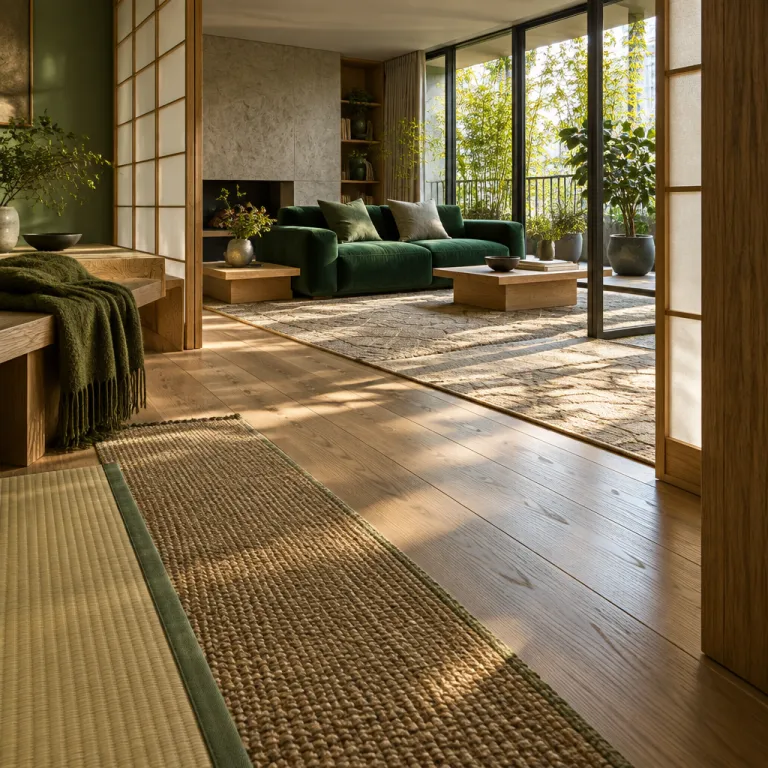
Why Japanese restraint feels like the new luxury for apartment living
Luxury travelers are turning toward a quieter kind of comfort in every room. The most compelling Japanese-influenced city apartments now pair calm restraint with the tactile ease that European families expect from long weekend stays. This shift is reshaping how an apartment feels from the first step onto the wooden floor to the last glance at the bedroom before checkout.
At the heart of this movement sit three Japanese interior principles that matter for apartment living: ma, the intentional negative space between objects; wabi-sabi, the appreciation of imperfection; and kanso, a disciplined simplicity that still feels warm. When these ideas guide interior design, a compact home stops being a neutral container and becomes a carefully edited frame for modern living, where every space and every service room earns its place. Families used to crowded hotel layouts often find that this kind of space planning, with clean lines and a neutral color palette, lowers the volume of travel stress.
Design studios across Europe now treat Japanese style as a philosophy rather than a theme, which protects guests from cliché. Dora Dmitrieva’s Alpine Japandi residence in the Swiss Alps (completed in 2022 and documented in her studio portfolio) shows how Japandi style can merge Japanese restraint with Scandinavian softness, then translate naturally into an apartment layout that works for both couples and children. For travelers choosing between properties, the most successful Japanese-guided luxury apartments are those where the layout, the floor plans, and the materials quietly support daily rituals instead of shouting for attention.
From Tokyo apartments to European city stays: how cross cultural design really works
Look closely at a well-considered Tokyo apartment and you see how every centimetre of space is negotiated. In many Japanese apartment buildings, the living room, bedroom, and even a compact studio corner share one continuous floor, yet the apartment layout still feels legible and calm. That same intelligence is now guiding European operators who want Japanese interior clarity without losing the layered comfort that defines urban apartment living.
Architecture firms such as OEO Studio and Norm Architects have worked directly in Tokyo, refining a modern design language that travels well. OEO Studio’s “Azabu Residence” project in Tokyo (2018, a 140 m² family home) and Norm Architects’ “Kinuta Terrace” renovation (2019, a 36-unit apartment complex in Setagaya) show how a Japanese-style living room can stay minimal while still offering deep sofas, generous wooden tables, and floor lamps that create pools of light for families reading together. When these teams consult on European serviced apartment concepts, they bring back not just room ideas but a whole approach to compact living, where a small space for toys or a discreet service room for laundry is carved out with the same care as the main living area.
For travelers, this cross-pollination means a Japanese-informed luxury apartment in Paris or Copenhagen can feel as efficient as a Tokyo studio while remaining unmistakably local. You might find tatami mats in a single tatami room used as a meditation corner, while the rest of the house leans into linen, stone, and oak that echo the region. If you care about how light, plants, and materials shape your stay, it is worth reading city-focused guides such as this look at New York’s apartment scene and its emphasis on light and kitchens, then seeking similar qualities in Japanese-influenced European apartments.
Inside Japanese inspired interiors: materials, ma, and the luxury of empty space
Step inside Japanese-influenced apartments and the first impression is often air, not furniture. The Japanese interior approach treats empty space as a material in its own right, so the layout of each room is drawn around what is left open rather than what is filled. For families, that means a living room where children can spread out on the floor without navigating a maze of side tables and decorative chairs.
Material choices quietly reinforce this sense of calm in every Japanese-style luxury apartment that takes the philosophy seriously. Expect wooden floors in pale or smoked tones, linen curtains that filter light, and stone or paper elements that soften acoustics while keeping clean lines. Tatami mats might appear in a dedicated tatami room or as modular panels in a studio corner, giving a subtle reference to Japan without turning the apartment into a stage set.
Bathroom and kitchen spaces follow the same logic, prioritising touch and proportion over spectacle. A compact service room for laundry may be hidden behind sliding wooden doors, while the main bathroom uses neutral colour tiles, generous counter space, and simple fixtures to create a spa-like pause between city outings; this kind of refined practicality echoes the attention to detail seen in many high-end properties with carefully designed bathrooms and luxury amenities. When you evaluate listings, look for floor plans that show clear circulation, minimal corridor waste, and an apartment layout where the living, dining, and bedroom zones feel distinct yet visually connected.
Layout callout: Imagine a two-bedroom Japandi city apartment of around 70–80 m² where the entrance opens into a wide, uncluttered hall, the living and dining share one open space framed by a single wall of low storage, and a sliding panel conceals a compact 1.5 m² laundry room beside the bathroom. This kind of simple, legible floor plan is a strong indicator that Japanese design principles have shaped the interior.
Japandi for families: how restraint and warmth share the same apartment
Traveling with children often means negotiating between aesthetics and practicality in every room. Japandi style, the fusion of Japanese minimalism and Scandinavian functionality, offers a rare middle ground where a Japanese-guided luxury apartment can stay serene while still absorbing the chaos of family life. The key lies in how the space is zoned, furnished, and lit rather than in how many objects it contains.
Designers like Dora Dmitrieva show that Japandi interiors can feel cocooning rather than austere, especially when natural textiles and rounded wooden furniture soften the clean lines. Low storage along the living room wall can hide toys, while a raised platform with tatami mats doubles as both a play stage and a quiet reading tatami room in the evening. In the bedroom, a neutral colour palette and simple interior design details, such as wall-mounted bedside shelves instead of bulky tables, free up floor space for suitcases and travel cots.
For parents booking a Japanese apartment–style stay, the most useful filter is often the apartment layout rather than the headline amenities. Look for floor plans that show a clear separation between the main bedroom and the living room, even in a small studio or compact Tokyo-apartment-inspired space. A well-planned service room for laundry, a flexible dining area, and thoughtful room ideas for small spaces can make the difference between a visually pleasing apartment and one that genuinely supports modern living with children.
How to read listings: spotting genuine Japanese design in luxury apartments
On a booking website, it can be hard to tell whether a Japanese-influenced luxury apartment interior is thoughtfully curated or simply styled for photographs. Start by reading the description of materials and layout rather than focusing only on decorative objects in each room. Genuine Japanese-style influence usually shows up in the way space is organised, the prominence of wooden elements, and the clarity of the apartment layout.
Look for mentions of Japandi or Japanese interior design that are backed by specific details, such as FSC-certified wood, stone worktops, or tatami mats used in a dedicated tatami room rather than scattered as props. Serious operators often collaborate with studios like OEO Studio or Norm Architects, whose work in Japan and Europe has helped normalise this restrained yet comfortable style of apartment living. When a listing explains how the floor plans were opened up to create better space living, or how a service room was tucked behind sliding panels to keep the living room calm, you are usually seeing more than surface-level styling.
Nature integration is another reliable marker of quality in Japanese-influenced modern living spaces. Properties that embrace biophilic design, with indoor greenery, natural light, and breathable materials, tend to age well and feel restorative after long city days; for a deeper dive into this approach, explore our feature on biophilic design in luxury apartment stays. As one recent analysis of design trends notes, "Increase in Japandi-style interior design projects" and "Growth in demand for natural materials in interiors" reflect a broader shift toward sustainable, culturally aware interiors that reward guests who pay attention to the quiet details.
FAQ: Japanese inspired luxury apartments for design conscious travelers
What is Japandi style in the context of apartment stays ?
Japandi style in apartment living is a fusion of Japanese minimalism and Scandinavian functionality, applied to every room rather than just to decorative accents. In practice, that means clean lines, neutral colour palettes, and wooden floors combined with soft textiles and practical storage. For travelers, a Japandi apartment layout usually feels calm, efficient, and easy to maintain during a stay.
How does Japanese design change the feeling of a small apartment ?
Japanese interior principles treat a small space as an opportunity to refine rather than to compromise. By emphasising ma, or negative space, designers keep the living room, bedroom, and studio corners visually open, often using sliding doors and built-in storage to reduce clutter. The result is that even a compact Tokyo-apartment-inspired layout can feel generous, especially when tatami mats, low furniture, and thoughtful room ideas support flexible use throughout the day.
Which materials should I look for in a Japanese inspired luxury apartment ?
High-quality Japanese-influenced luxury apartment schemes usually prioritise natural materials that age gracefully. Expect wooden floors or platforms, stone or composite worktops, linen or cotton textiles, and paper or fabric shades that soften light in the living room and bedroom. These choices, combined with a neutral colour palette and clean lines, tend to signal a serious commitment to Japanese style rather than a passing trend.
Are Japanese minimalist apartments practical for families with children ?
Well-designed Japandi and Japanese-style apartments can be very practical for families, because the focus on storage and layout keeps small spaces flexible. Low shelving, built-in benches, and a clearly zoned living room allow toys and luggage to be tucked away quickly, restoring calm between outings. When booking, look for floor plans that show separate sleeping areas, a functional service room or laundry corner, and enough open floor for children to play safely.
How can I tell if a listing reflects genuine Japanese design principles ?
Authentic Japanese-influenced interiors usually describe their apartment layout, materials, and lighting strategy in detail rather than relying on a few props. References to tatami room zones, ma or negative space, and collaboration with recognised design studios are good signs. If the photos show uncluttered rooms, consistent wooden elements, and a clear relationship between living, dining, and bedroom areas, you are likely looking at a considered Japanese-inspired luxury apartment rather than a themed set.